Male athletic pelvic pain
Groin, hip and deep pelvic pain in active men that scans and standard treatment keep missing. We find what’s actually driving it — and get you back to sport.
What it is
Athletic Pelvic pain in active men is rarely one simple injury. It’s usually a cluster of overlapping problems — around the adductors, the hip, the lower abdomen and the pelvic floor — that share load and often get lumped together under a single, unhelpful label. The pain typically shows up with running, kicking, twisting or after training, and it can be frustratingly slow to settle.
If you’ve had rest, generic exercises or even scans that didn’t give clear answers, that’s common — and it doesn’t mean nothing can be done. When the real driver is identified, most active men can get back to full training with a targeted, progressive plan.
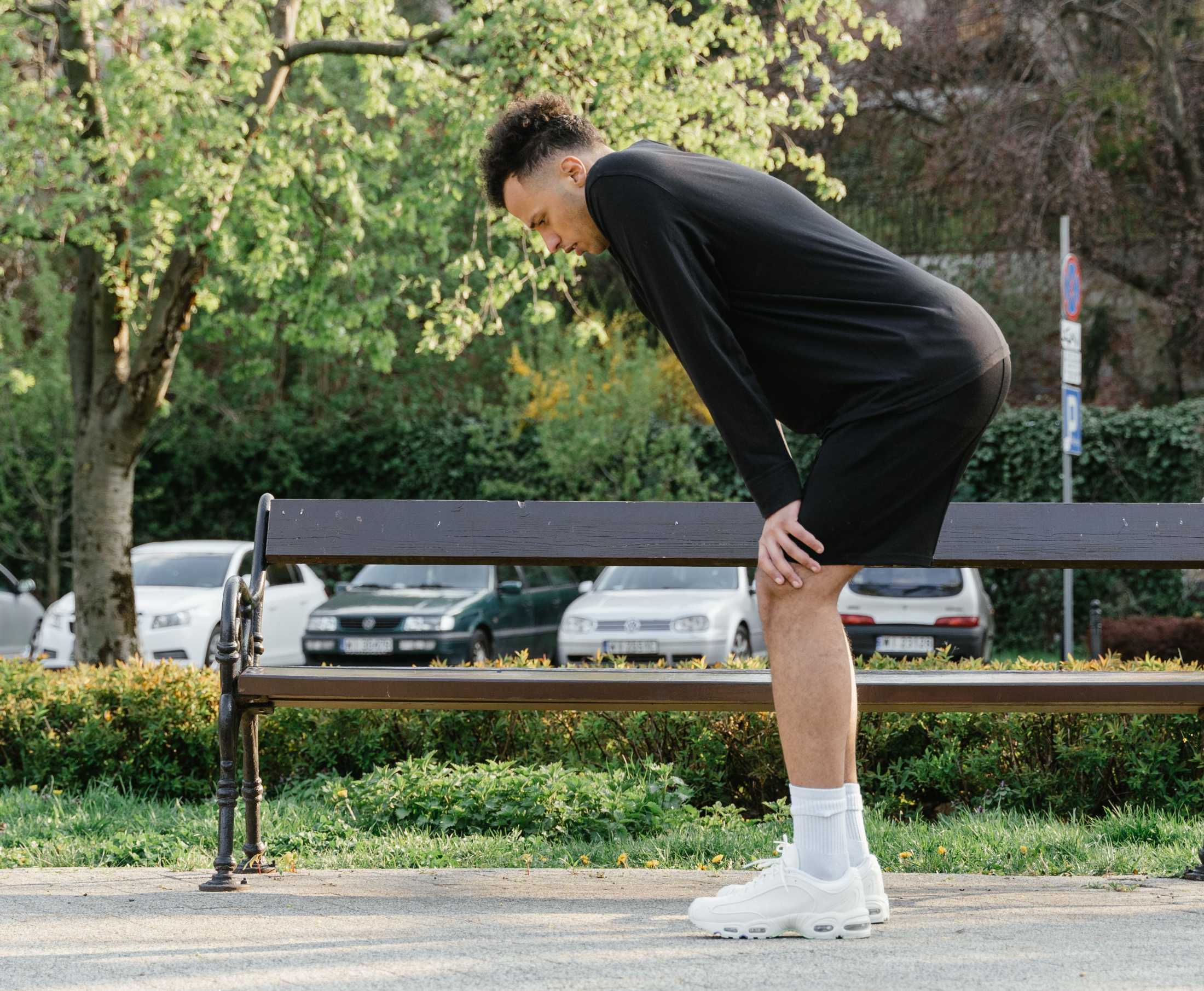
You're in the right place if…
You’re in the right place if this sounds like your pain.
- Groin, lower abdominal or hip pain that flares with sport
- Pain when kicking, sprinting, twisting or changing direction
- Aching in the pelvis or perineum after training or the next day
- Pain on coughing, sneezing or sitting up
- Deep hip or groin stiffness that won’t fully warm off
- Symptoms that improve with rest but return the moment you load up again
- Scans or treatment that haven’t pinned down a clear cause
Why does it happen?
Because the adductors, abdominal wall, hip and pelvic floor all attach around the same area and share the workload of sport, a problem in one quickly involves the others — which is exactly why the true source is so often missed. Sometimes an overactive, tense pelvic floor is a hidden driver of pain that looks purely like a “groin strain”.
Contributing factors usually include training load and how quickly it’s changed, hip and pelvic control, core and pelvic-floor coordination, and previous injuries that shifted how you move. Untangling that mix is the whole point of a specialist assessment.
How we help
We assess the full chain — hip, abdomen, adductors and pelvic floor — and how they’re working together under the demands of your sport, so we can target the actual cause rather than chasing symptoms. That pelvic-floor perspective is what sets specialist assessment apart from generic groin rehab.
Treatment is active and progressive: hands-on work where it helps, releasing and retraining the pelvic floor where it’s involved, and a graded loading programme built around your sport and your goals. We rebuild your capacity step by step so you return stronger and less likely to flare again.
What your journey looks like
The aim isn’t just to calm the pain — it’s to get you back doing what you love, with the resilience to stay there. Here’s how:
- A specialist assessment. A proper look at the whole region, including the pelvic floor, to find what’s really driving your pain.
- A clear diagnosis and plan. We explain what’s going on and map out a return-to-sport pathway with real milestones.
- Progressive loading. A graded programme that rebuilds strength and tolerance so you get back on the pitch — and stay there.
The questions men actually ask
I’ve rested for weeks and it keeps coming back — why?
Because rest calms an irritable area but doesn’t rebuild its capacity or fix the underlying driver. As soon as you load it again, it flares. A graded plan that addresses the real cause is what breaks that cycle.
My scan was normal — so what’s causing the pain?
Scans miss a lot of athletic pelvic pain, especially when the pelvic floor or load management is involved. A normal scan is reassuring, not a dead end — it just means we assess the things imaging doesn’t show.
Will I have to stop training completely?
Usually not. We’re far more likely to modify your training than stop it, keeping you as active as possible while we rebuild the area. Complete rest is rarely the answer.
How do you examine the Pelvic floor and Is this going to involve an internal examination?
Ultrasound Imaging of the Male Pelvic Floor
Initially we examine your pelvic floor externally with ultrasound imaging. This is done on the lower abdomen and also the perineum . It allows us to look inside but stay outside. It also in the words of my brilliant Ultrasound Colleague Dr Alime Buyuk, "Makes the invisible visible". We always start with ultrasound imaging to explore the pelvic floor and this is included in the appointment cost.
Perineal Assessment
We also examine the pelvic floor through outer perineal palpation or gentle pressure .
Internal Pelvic Floor Assessment
With some patients it may also be necessary to examine the pelvic floor because it’s the most direct way to assess the pelvic floor . Gerard and his team are very skilled at this and we can do it gently and sensitively in a way that involves you and is well explained to you. It is only ever done with your explicit consent, fully explained first, and never forced.
You don’t have to live with this
If any of the above sounds like you, the next step is simple. Ask us anything in confidence — no pressure, and no obligation to book.
Ask Gerard a question in confidence