Post-Prostatectomy MOT
Your recovery. Your plan. Your life.
A complete men’s health physiotherapy recovery check-up. Still leaking, still using pads, or unsure whether your recovery is on track? The MOT brings the parts of your recovery together — clear answers, specialist assessment and a practical plan for what to do next.
What is the Post-Prostatectomy MOT?
Recovering after prostate cancer surgery can be physically, emotionally and practically challenging. Many men are told to do their pelvic floor exercises and then left with unanswered questions — Am I doing them correctly? Why am I still leaking? When can I reduce my pads? What about erections? When can I get back to normal life?
The Post-Prostatectomy MOT is a specialist men’s health physiotherapy-led recovery check-up designed to answer exactly those questions. Your appointment may bring together pelvic floor ultrasound imaging, functional pelvic floor assessment, bladder retraining, pad-weaning advice, erectile rehabilitation, Somaerect vacuum pump guidance, sexual leakage strategies and return-to-activity planning.
This is more than a pelvic floor exercise appointment. It is a complete recovery review designed to help you understand what is working, what may need to change, and what to do next.

What’s included in your MOT
Why pelvic floor exercises aren’t always enough
Pelvic floor exercises matter after a prostatectomy — but many men are never shown whether they are actually doing them correctly. Some men brace too hard, hold their breath, tighten their buttocks or thighs, push down instead of lifting, or can’t fully relax afterwards. Others perform them perfectly lying down, but can’t use them when it counts.
That matters, because leakage rarely happens while you’re lying on a treatment bed. It happens when you stand up, walk, cough, sneeze, bend, lift, climb stairs, exercise or tire later in the day. So the MOT takes a functional approach: not just whether you can contract your pelvic floor in the clinic, but whether it works when you actually need it.
See whether your pelvic floor is working
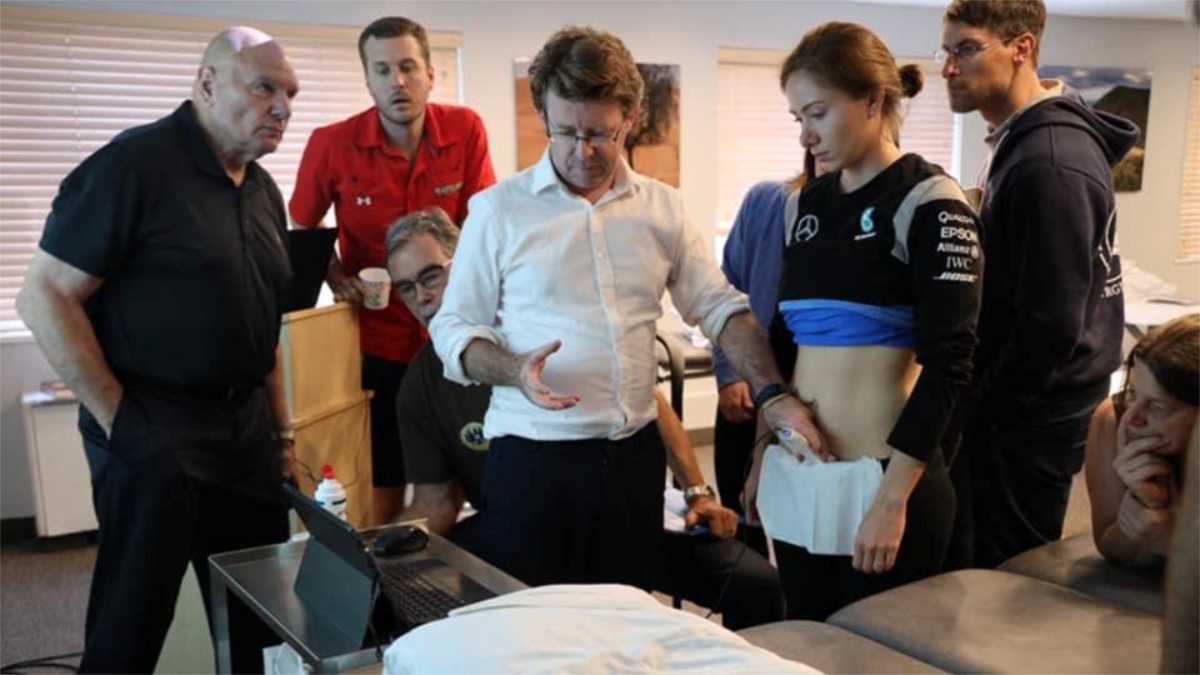
One of the key parts of the MOT is the use of ultrasound imaging where appropriate. It lets us assess your pelvic floor and give you real-time feedback — you can see the muscles working on screen while you learn to improve your technique.
It helps answer the questions that matter:
- Is the pelvic floor lifting correctly, and are you using the right muscles?
- Are you pushing down rather than lifting, or using too much effort?
- Are you holding your breath, and can you fully relax after contracting?
- Does your technique hold up in different positions?
For many men, seeing the pelvic floor working is both reassuring and practical. Instead of guessing, you understand what’s happening and what needs to change.
Bladder retraining and getting off the pads
After surgery, some men develop habits that make recovery harder — going “just in case”, cutting fluids for fear of leaking, passing urine very often, or rushing to the toilet with urgency. As part of the MOT we review how often you go, your fluid and caffeine intake, urgency, night-time symptoms and your confidence leaving the house — then help you rebuild a healthier bladder pattern.
“When can I stop wearing pads?” is one of the most common questions we hear. Some men stay in pads longer than they need to; others reduce too quickly and lose confidence. We look at how many you use, when and how much you leak, what triggers it, and whether you’re ready — then give you a realistic, manageable pad-weaning plan. The aim isn’t to rush you. It’s fewer pads, less anxiety and more freedom.
Erectile rehabilitation and sexual leakage
Erectile dysfunction is common after a prostatectomy and can be one of the hardest parts of recovery. As part of the MOT we can discuss erectile rehabilitation and the role of the Somaerect vacuum erection device — how it’s used after surgery, how regular blood flow may support recovery, how to use it safely and how often, common mistakes, and how it fits alongside medication or a conversation with your GP or urologist.
Some men also experience urinary leakage during arousal or orgasm — known as climacturia. It can feel embarrassing, but it’s a recognised side effect of surgery and something we discuss openly. Your MOT may include advice on bladder preparation before sex, pelvic floor timing, practical strategies and communication. Many men feel real relief simply knowing they’re not the only one.
Every part of this is discussed in a straightforward, respectful and completely non-judgemental way. We talk about erections, leakage and sexual function every day — your appointment is private, and you’re in control throughout.
Getting back to exercise, sport and normal life
Recovery isn’t only about continence — it’s about returning to normal life: walking without worrying about leakage, work, travel, the gym, golf, running, cycling, lifting confidently, sex, and feeling like yourself again.
Your MOT includes return-to-activity planning based on your operation, symptoms, current fitness, leakage pattern and the things that matter to you. We build in standing pelvic floor work, timing during movement, “the Knack” before coughing or lifting, sit-to-stand control, and activity- and sport-specific progressions — so you return safely and confidently, without unnecessary fear or restriction.

Is the Post-Prostatectomy MOT right for you?
It may help if you’ve had prostate cancer surgery and:
- You’re still leaking or still using pads
- You’re unsure your pelvic floor exercises are correct
- You’d like ultrasound to check your technique
- You have urgency or unhelpful bladder habits
- You want help reducing your pad use
- You’re struggling with erectile dysfunction
- You’re using or considering a Somaerect pump
- You leak during arousal or orgasm
- You want to return to exercise or sport
- Your recovery feels like it has plateaued
It can help whether you’re early in recovery or much further down the line and still uncertain about your progress.
The questions men actually ask
Is this just another pelvic floor exercise appointment?
No. Pelvic floor assessment is an important part of the MOT, but the appointment also considers your bladder habits, pad use, erectile rehabilitation, sexual leakage, exercise, sport and wider return to everyday life.
Can you check whether I am doing my exercises correctly?
Yes. Ultrasound imaging may be used to assess whether the pelvic floor is lifting correctly and whether you are over-bracing, holding your breath or using other muscles instead.
Can you help me reduce my pad use?
Yes. We review how much you are leaking, when it happens, what triggers it and whether you are ready to begin reducing pads safely and realistically.
Can you help with erectile dysfunction?
Yes. The MOT can include practical erectile rehabilitation guidance, including advice on the safe use of a Somaerect vacuum erection device and when further medical input may be needed.
I leak during orgasm. Can this be discussed?
Absolutely. Leakage during orgasm, known as climacturia, is a recognised side effect following prostatectomy. It can be discussed openly and professionally, and we can provide practical strategies to help.
Is it too late for an MOT?
No. The Post-Prostatectomy MOT can be useful early after surgery, or much later if you are still leaking, using pads, struggling with erections or feeling that your recovery has plateaued.
Can you help me return to exercise or sport?
Yes. Your plan can be adapted to the activities that matter to you, including gym training, golf, running, cycling, racket sports and team sports.
Stop guessing. Start recovering.
Life after prostatectomy can feel uncertain — but you don’t have to work it out alone. The MOT gives you a specialist assessment, ultrasound where appropriate, and a practical recovery plan built around you.
Book your MOT Ask Gerard a question in confidence